Sheet Materials for Interiors: Uses, Edges and CNC
This is the reference half of the material question: what each board is, where it belongs, and where it will disappoint you. It covers properties, limitations and typical interior uses. For the decision process around these materials, see how to choose furniture materials.
Everything below assumes CNC production, because the machining behaviour of a board is part of its specification, not a separate topic.
Birch plywood
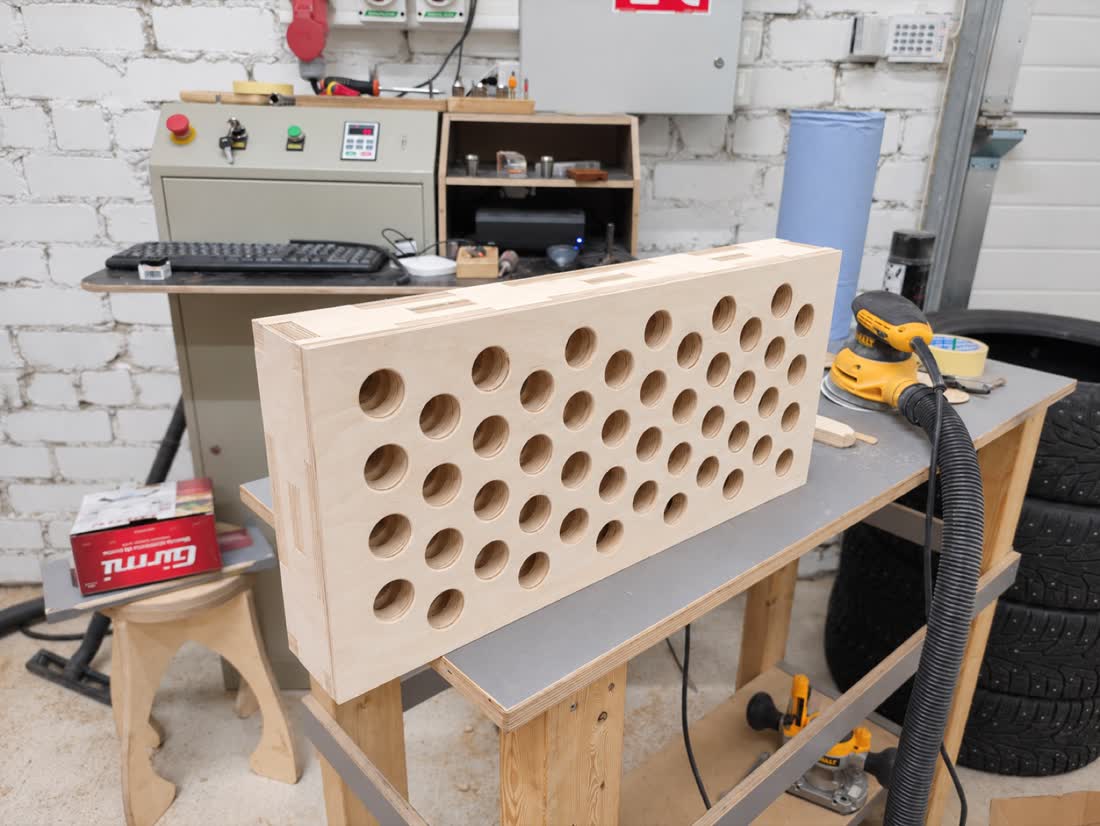
Birch plywood is what gets specified when the layered edge is meant to be seen.
What it does well. Good strength for its weight and thickness. Screw holding is generally better than in particle-based board, though it still depends on panel thickness, screw type and whether the screw goes into the face or the edge. Machines cleanly and takes fine CNC detail, so it suits perforated panels, shaped parts and visible joinery.
Where it disappoints. Face veneer quality varies by grade, and the difference between grades is visible under a clear finish in a way it is not under paint. Core gaps show up at a machined edge precisely where the edge is meant to be the feature, so specify core quality as well as face grade wherever edges stay exposed. Plywood is also not the cheapest way to build a hidden carcass.
Grade and thickness answer different questions. Face grade decides appearance: for anything under a clear finish, it is the specification, and for hidden structure a lower grade is the sensible economy. Thickness and construction are what you size for load and span.
Typical use: visible casework, shelving, seating, shopfittings, play and education interiors, anything where the edge is shown.
MDF
MDF is the standard substrate for painted interior components.
What it does well. A uniform fibre structure with no grain direction and no voids. Routed profiles, shaped fronts and three-dimensional relief all come out crisp. It is dimensionally stable in a controlled interior, and its smooth faces make it the usual choice under paint.
Where it disappoints. Heavy. Poor screw holding into the edge unless the joint is designed for it. Machined edges absorb more than the faces, so they need sealing and sanding before they paint the same way. Standard MDF is vulnerable to moisture; moisture-resistant grades cope better with humidity but are not waterproof. A clear finish leaves the fibre structure visible.
Typical use: painted doors and fronts, shaped and routed panels, wall panelling, reception desk faces, anything where colour and surface perfection carry the design.
Melamine-faced board
The workhorse of hidden casework, and a material that is often criticised for failing at jobs it was never meant to do.
What it does well. Finished on both faces straight from the sheet, which removes a whole finishing stage from the carcass. Consistent, dimensionally predictable, available in a wide range of decors, and often the cost-effective way to build cabinet interiors in volume.
Where it disappoints. The board is particleboard or MDF surfaced with decorative paper impregnated with melamine resin. It chips at machined edges if tooling and feeds are wrong, and it cannot be repaired invisibly. Whether it suits an exposed counter depends on the board specification, the edge protection and the expected wear; a heavily used worktop usually wants HPL or another specified surface.
Typical use: cabinet carcasses, interiors, shelving behind doors, back-of-house storage, and visible surfaces in controlled low-contact environments.
HPL and compact laminate
HPL is what gets specified where the surface takes frequent use.
The core difference from melamine. Melamine is a decor paper fused directly to the board. HPL is a separate laminate sheet, built from multiple resin-impregnated layers pressed under high pressure, then bonded to a substrate. That construction is the reason for the price difference and the reason for the performance difference. Compact laminate takes it further: the panel is a resin-impregnated paper core throughout, with no separate board substrate, so the edge is solid. Thickness and support still have to suit the application.
Where HPL earns its cost. High-contact horizontal surfaces, service counters, hospitality tables, anywhere cleaned often. It resists abrasion and impact better than a faced board; select the grade for the expected wear and follow the manufacturer's cleaning and chemical-resistance guidance rather than assuming it survives anything.
Where melamine is the better production choice. Hidden and low-contact work, high volumes, budget-controlled interiors. For a cupboard interior with modest wear requirements, melamine-faced board is usually enough.
Compact laminate specifically is worth the extra where the edge is exposed and takes punishment. Suitable grades work in humid and wet-area applications when detailed and installed to the manufacturer's requirements: washroom cubicles, wet zones, heavy-use counter edges.
Veneered panels
Veneer gives natural wood appearance with the stability of a board and the predictability of a sheet material.
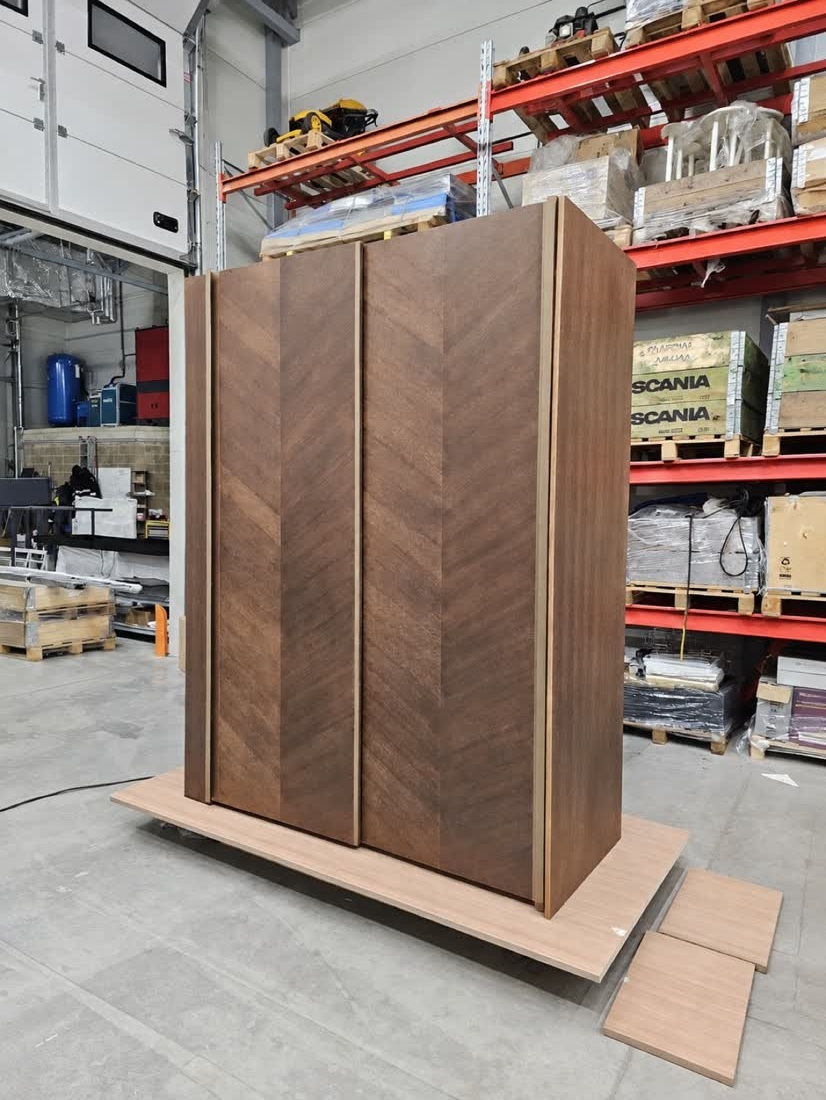
What it does well. A real wood surface across large areas, moving less than solid timber, though substrate choice, balanced construction and humidity all still matter. Species and cut can be selected, and grain direction can be matched across a run of doors or panels in a way solid wood makes difficult and expensive.
Where it disappoints. The veneer is thin. It cannot be sanded back repeatedly, so a deep scratch is a repair problem rather than a maintenance one. Edge detailing needs deliberate design, because a veneered edge that is not thought through is the first place the construction shows. Colour consistency across a batch depends on how the veneer was selected and laid, which is a specification matter, not luck.
Typical use: wall panelling, door fronts, premium casework, anywhere a natural surface is needed at a scale solid wood cannot cover predictably.
Acrylic
Chosen for transparency, translucency and specific visual effects rather than as a general-purpose board.
What it does well. Colour, translucency and light transmission that no wood-based board can produce. Machines to precise dimensions and takes engraving cleanly. Good for signage, light diffusers, display details and anywhere a crisp synthetic edge is the intention. For guards, select the plastic grade and thickness for the impact resistance required.
Where it disappoints. Scratches more readily than laminate. Thermally sensitive during machining, which is a real production constraint rather than a theoretical one. Load-bearing acrylic parts need checking for thickness, span, creep and connection design.
One production note. At Cutlab we cut acrylic with a single-flute tool in one pass at full depth, and we avoid a repeat pass along the same path because it can melt the edge rather than improve it.
Cabinetry: do not forget the inside
A recurring specification gap. The carcass interior is treated as an afterthought, then becomes visible every time a door opens.
In practice the interior needs three things: a surface that is easy to clean, edges that do not chip when shelves are adjusted, and a decor that does not fight the exterior. Melamine-faced board handles all three cheaply. Specify the interior at the same time as the exterior.
Edges decide how the finish is judged
Across every material above, a perfect face with a poor edge reads as poor work, and a modest face with a well-resolved edge reads as considered.
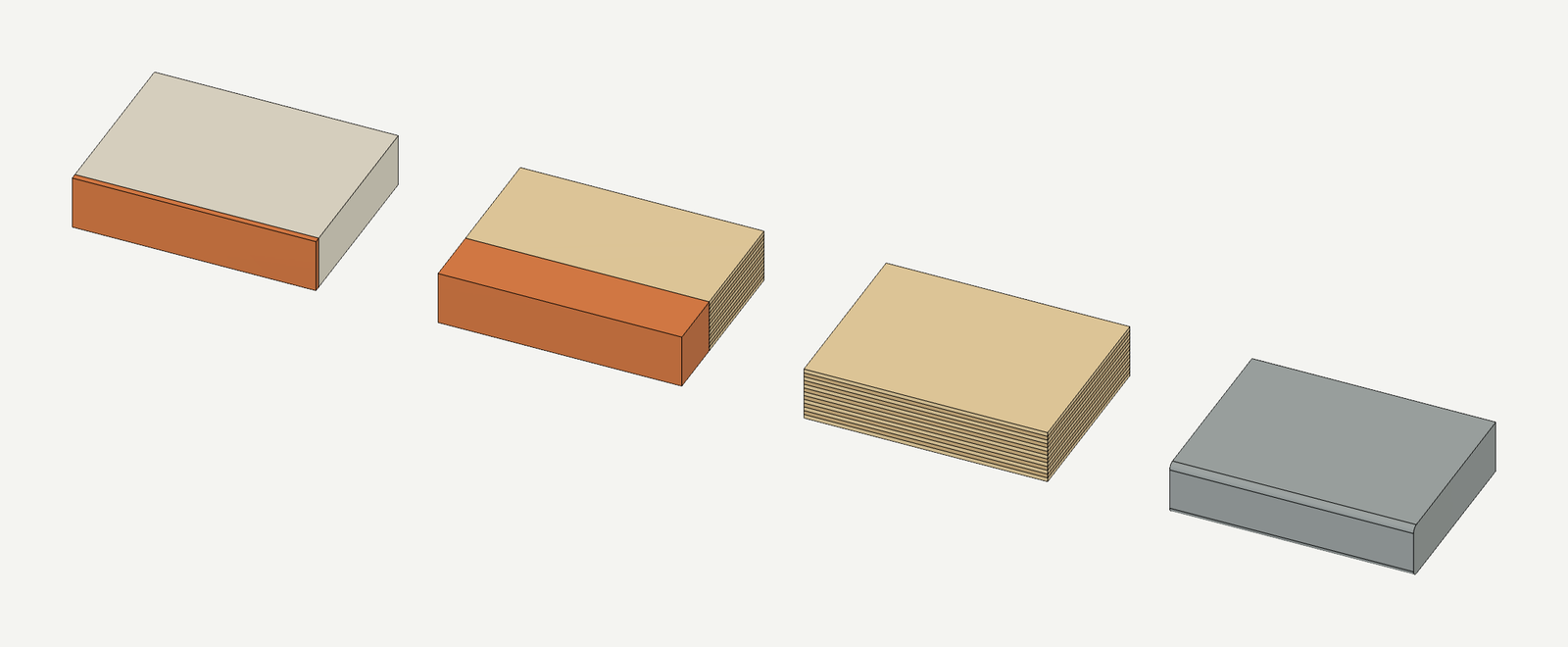
Edge options depend on the board: ABS or laminate banding on faced panels, solid lippings on plywood and veneer, painted and sealed edges on MDF, exposed and finished plywood laminations where the layers are the design. For acrylic, agree the edge finish you need and the method available before production.
Specify the edge at the same time as the face. It is a single decision.
Specify samples before the run
On any project where the surface carries the design, request samples on the actual substrate in the actual finish before committing to a full batch. Digital references and small chips do not show how a surface reads at full scale under the project's lighting.
Next step: send the application, the dimensions and the finish requirement, and we will advise on suitable materials. CNC milling and cutting · work we have done · file preparation guide
22.09.2026