
Cookies managing
Cookie Settings
Cookies necessary for the correct operation of the site are always enabled.
Other cookies are configurable.
Other cookies are configurable.
50 housings for holographic displays, shipped to 26 US airports
Retail and experiential
Cutlab built and shipped plywood housings for 50 Tensator Holographic Shard Stand units to 26 US airports, working with Campaign 3D (UK).
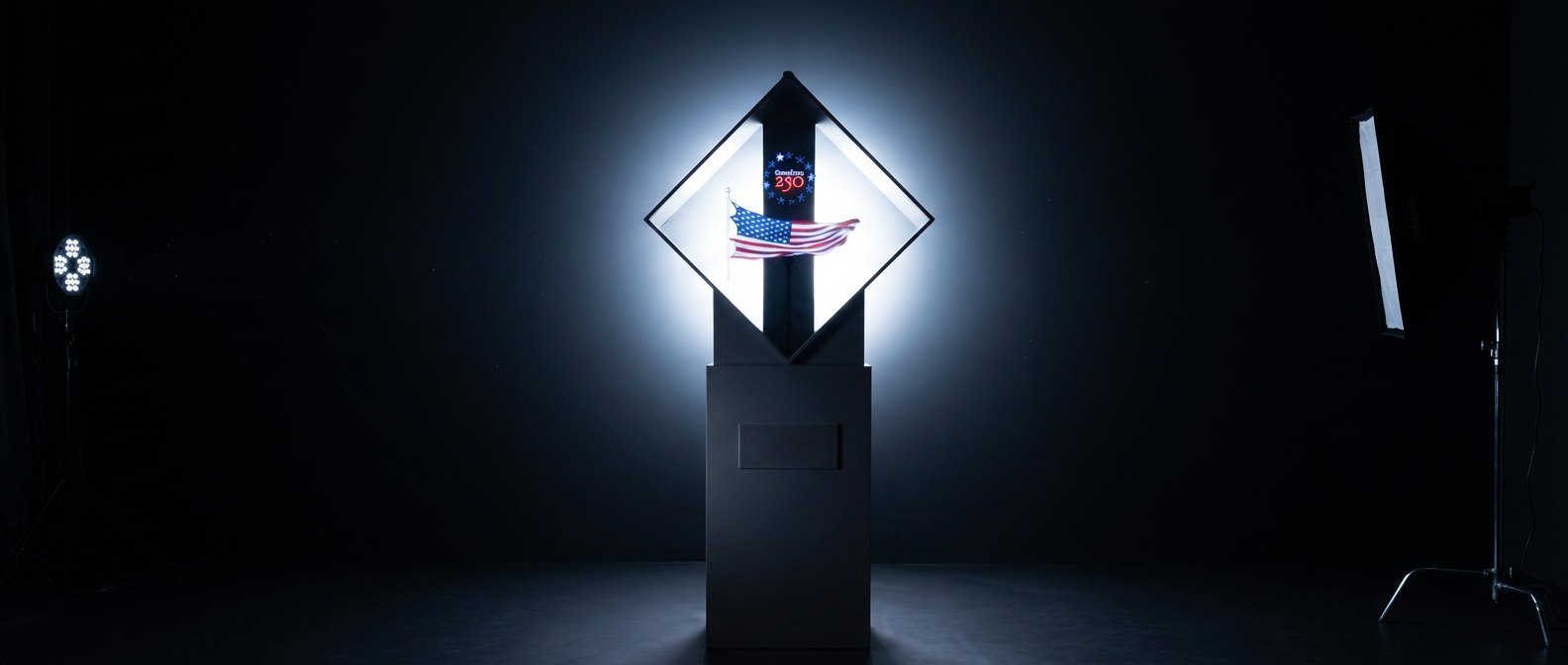
Cutlab engineered and built the plywood housings for the Tensator Holographic Shard Stand, then packed and shipped every unit from our workshop in Tallinn, Estonia, to airport security checkpoints across the United States. The display hardware and content are by Campaign 3D (UK).
50
housings built and shipped
26
US airports supplied
27
documented shipments
The count of shipments is higher than the count of airports because one location changed during installation and its unit was redirected to Orlando, which received two batches.
Campaign 3D
- Structural engineering of the housing to Campaign 3D's design: panel joints, the disassembly sequence, and tolerances that hold across 50 units
- CNC cutting and machining of the plywood panels
- Assembly of all 50 housings
- Stencilling, crating, and packaging for road and air freight to the US
- Shipping and shipment documentation for 27 consignments
- One Cutlab team member joined Campaign 3D's crew for on-site installation in the US
- Product design of the Tensator Holographic Shard Stand, including the plinth's shape and proportions
- Display hardware, holographic projection technology, and on-screen content
- Client relationship and rollout coordination across US airport locations
- Installation lead at each site, at US airport security checkpoints
Campaign 3D describes the Tensator Holographic Shard Stand as the first holographic display installed at airport security checkpoints anywhere in the world.
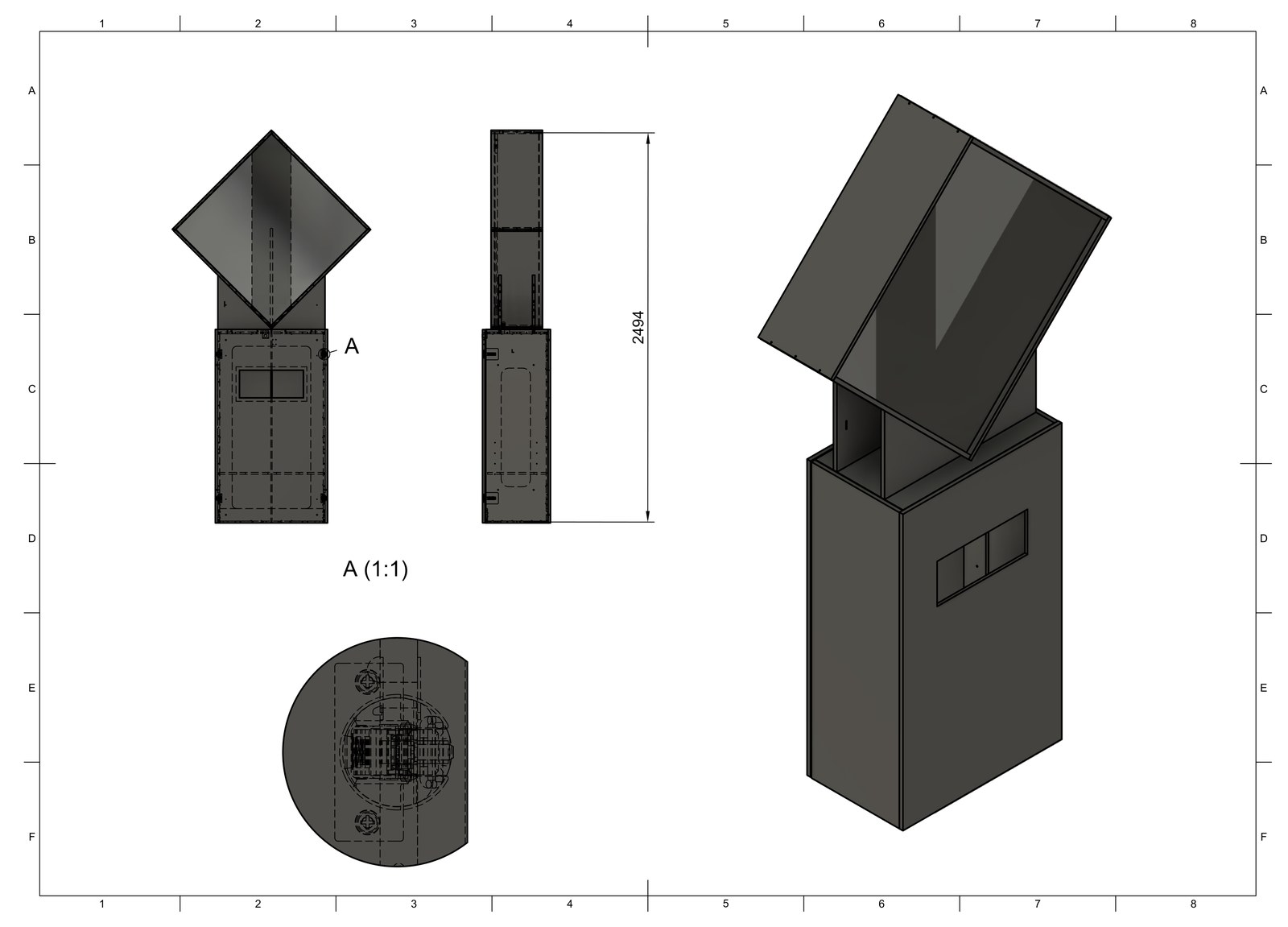
General arrangement of the stand. Height only; the rest of the dimensions belong to Campaign 3D's design.
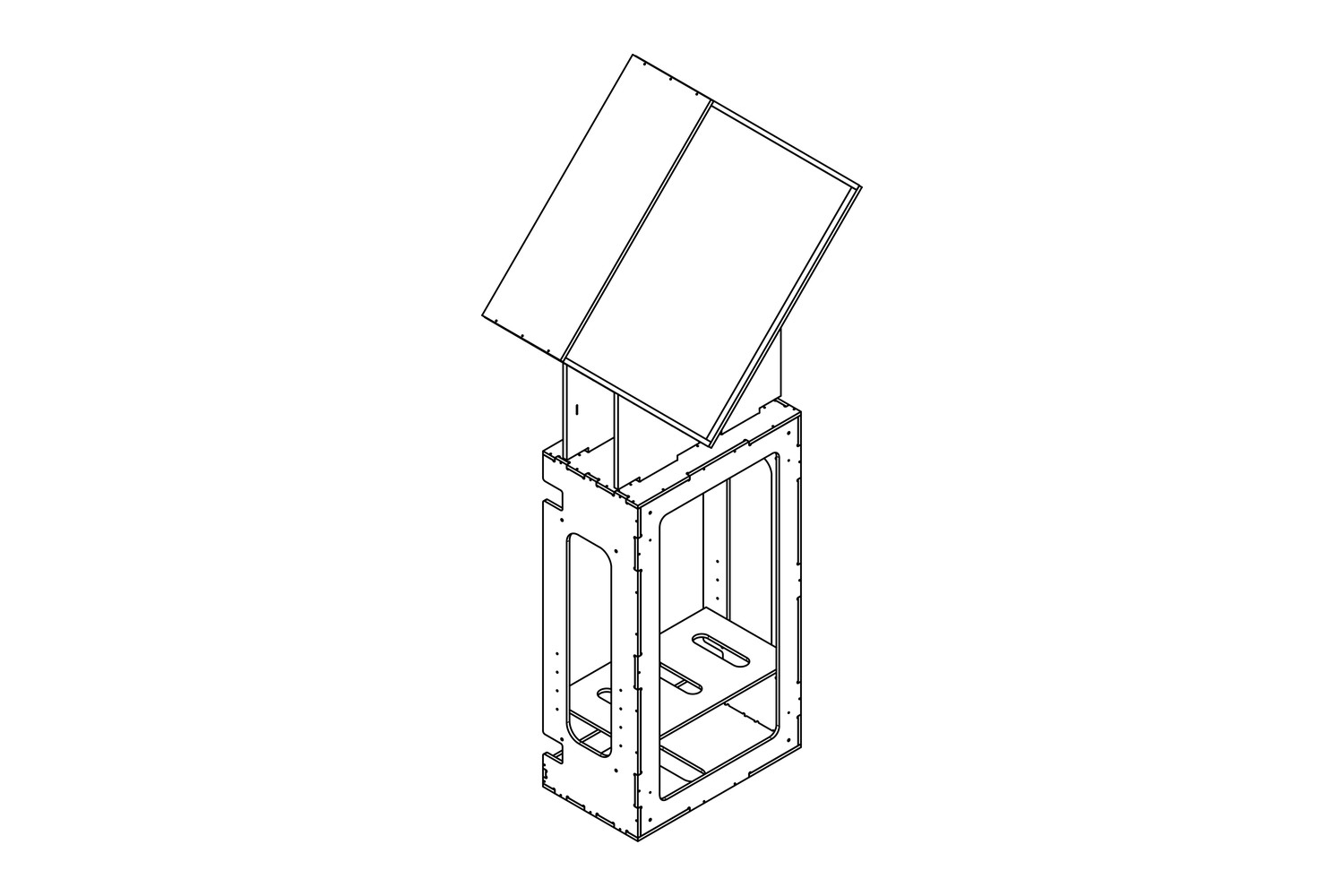
The internal frame: tabbed plywood panels, slots, and fixing points. This is the construction Cutlab designed behind Campaign 3D's exterior.
Video by Campaign 3D, not Cutlab: "Meet the Shard Stand: The Ultimate Platform for Holographic Displays," Campaign 3D's official channel, 2:22.
- Engineering. Cutlab engineered the construction behind Campaign 3D's design: how the panels join, come apart, and hold across 50 units, with fastening points and tolerances built for repeat production.
- CNC cutting. Plywood panels were cut and machined on CNC equipment in Tallinn, run as a batch rather than one at a time.
- Assembly. Panels were assembled into finished housings in the Cutlab workshop.
- Stencilling. Each crate was stencilled with both company names, Campaign 3D and Cutlab, before it left the workshop.
- Packing and shipping. Housings were crated and strapped for a transatlantic move, then sent out as 27 documented shipments from Tallinn to 26 US airport destinations.
- Installation. A Cutlab team member joined Campaign 3D's crew on site in the US for installation at airport security checkpoints.
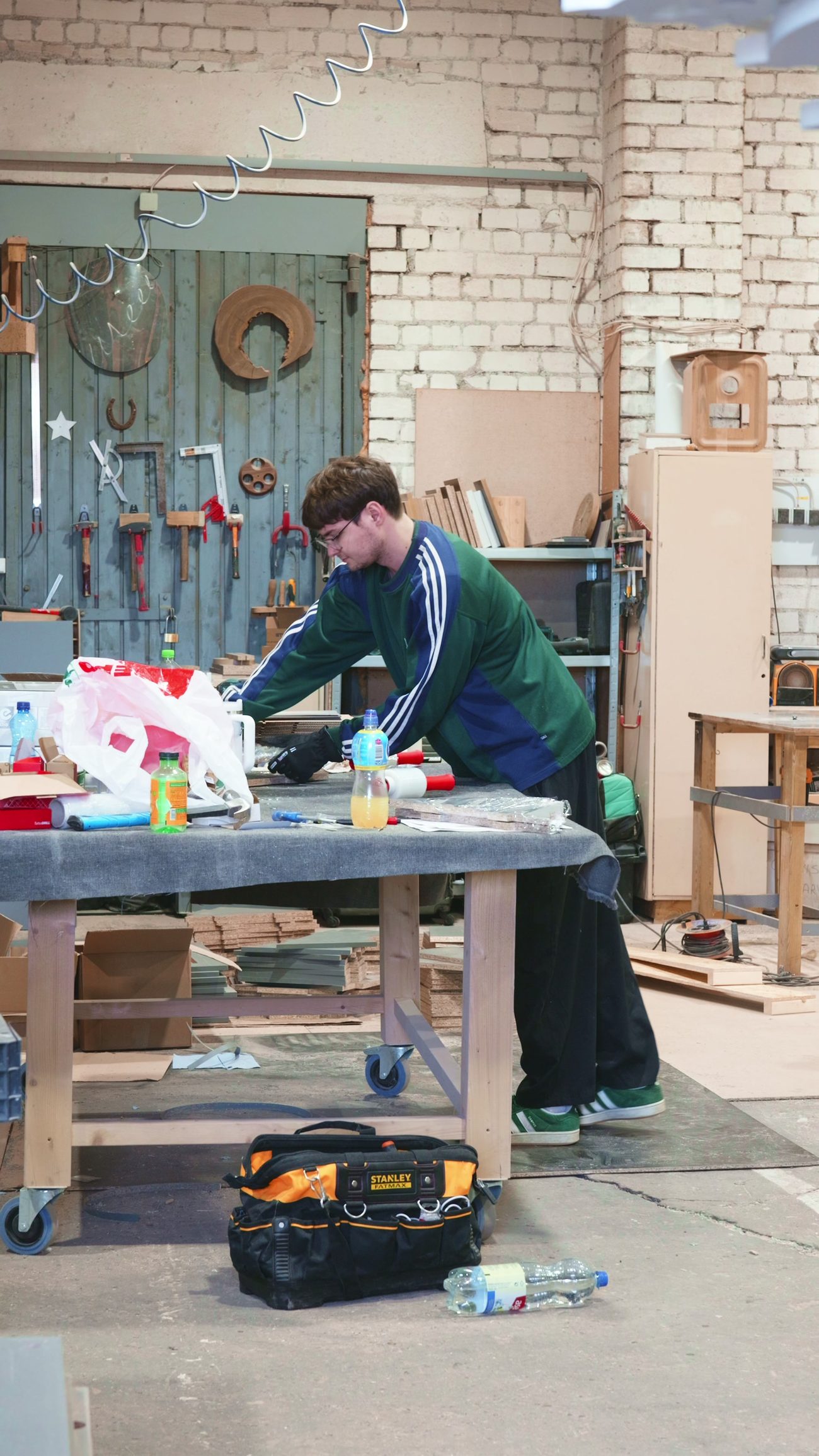
Assembly in progress in the Tallinn workshop.
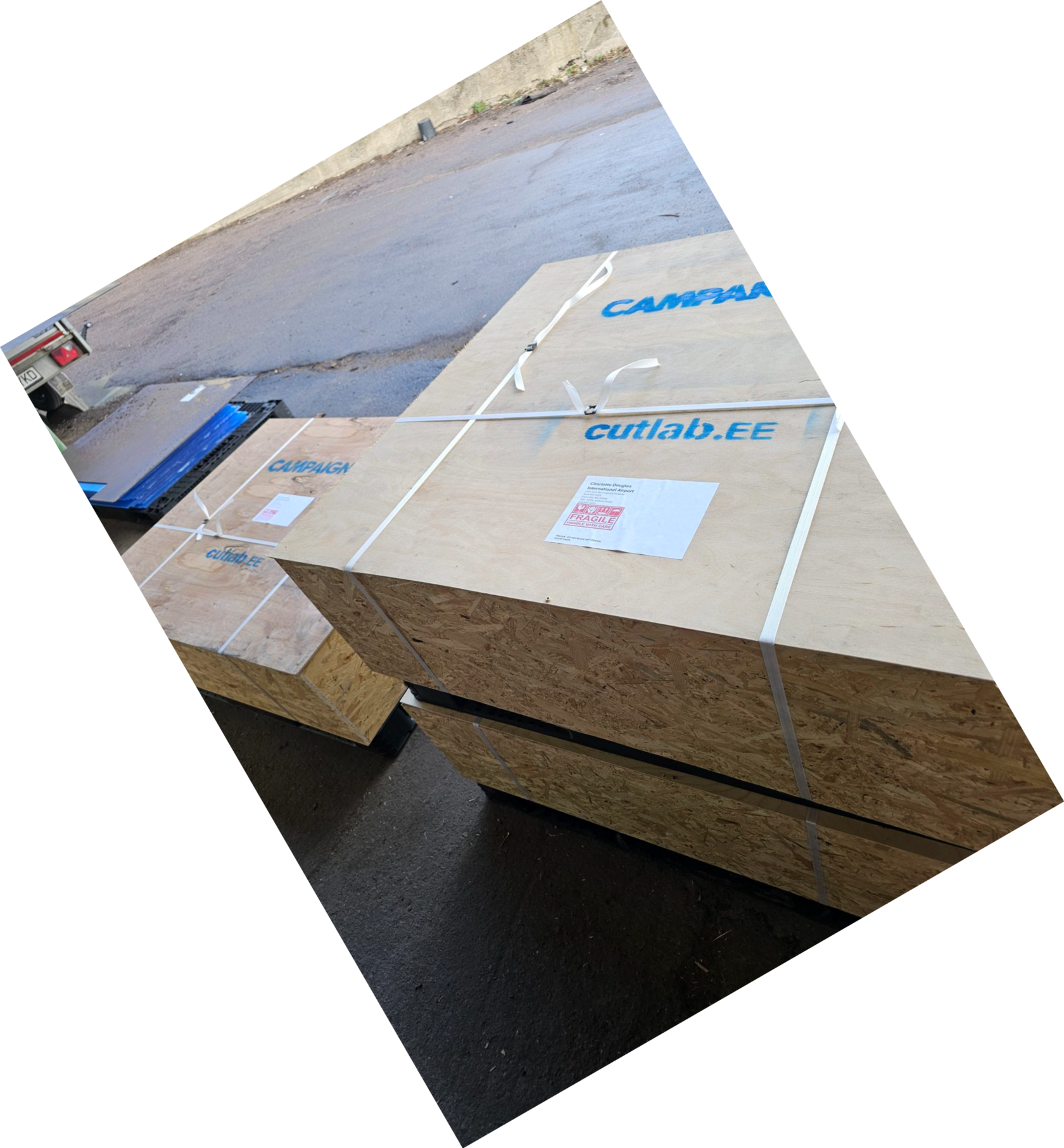
Both names on every crate: Campaign 3D and Cutlab.
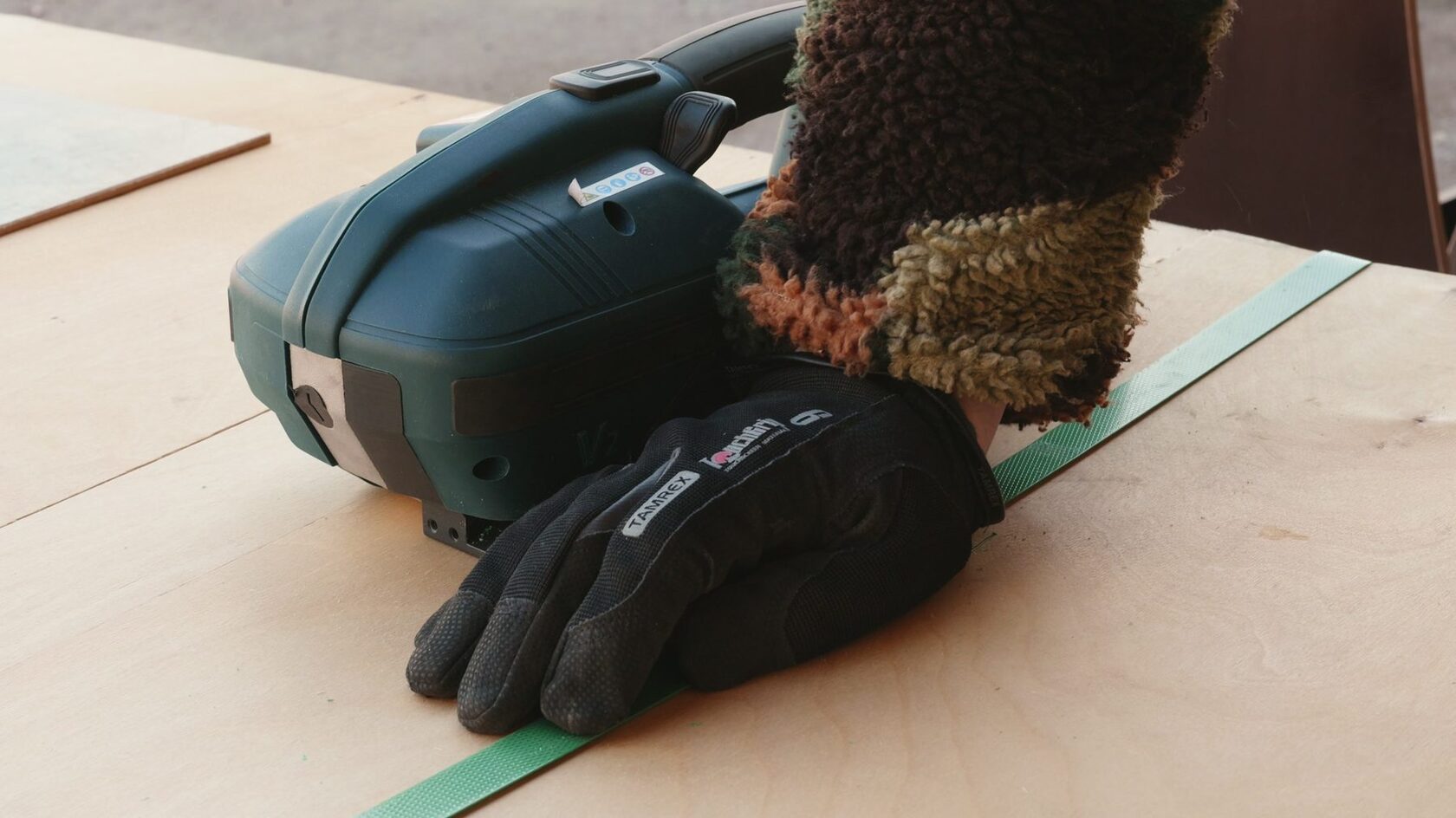
Strapping a crate before dispatch.
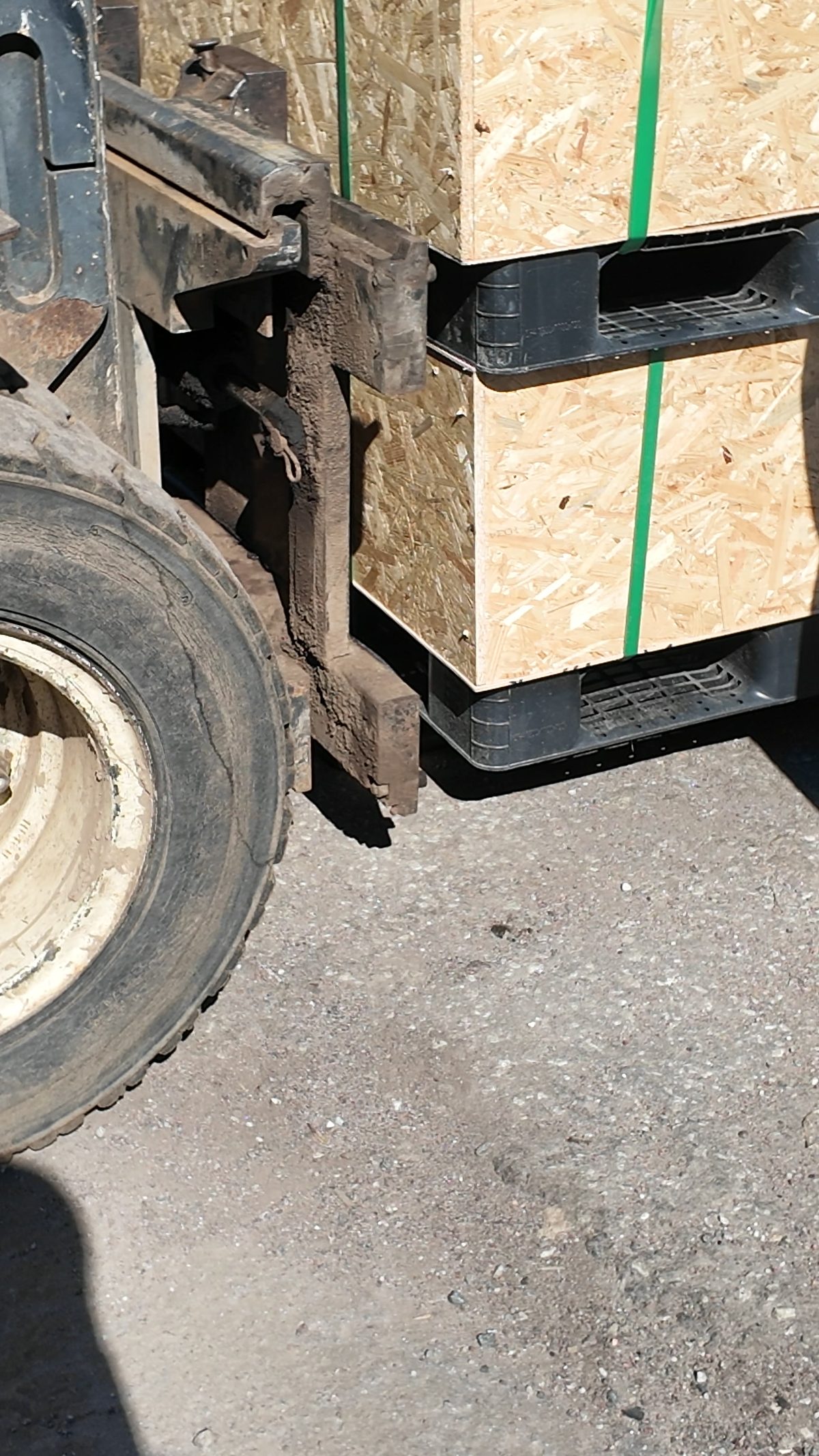
Loading crates for the first leg of the journey.
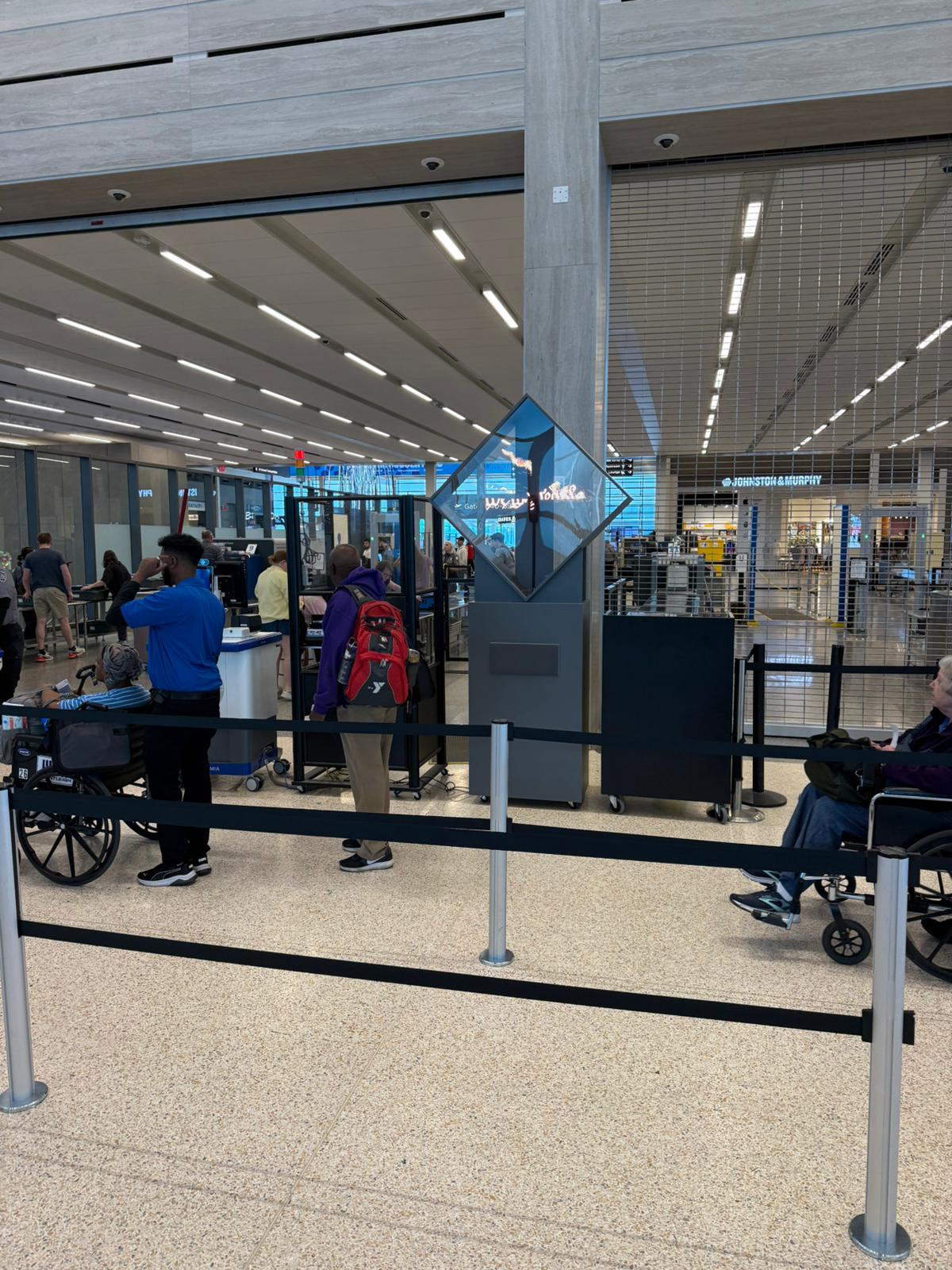
The finished stand running at a US airport. Display content by Campaign 3D.
- Repeatable production. 50 housings were built to the same design and the same tolerances, not as one-off pieces. That is the difference between a prototype shop and a manufacturing partner for a rollout.
- Export logistics. 27 shipments went from Tallinn to 26 destinations across the United States, each one crated, stencilled, and documented. Delivery beyond the EU is something we plan for, not an exception.
- Working alongside another vendor. On this project Campaign 3D owned the design and the client relationship; Cutlab engineered the construction and built, packed, and shipped it. We work this way with agencies and integrators who own the client and the design, and need a partner to work out how their product actually holds together and travels.